Ski Helmet With Visor: 12 Models Compared, $50 to $600
A ski helmet with a visor is a snow helmet with a built-in lens that replaces separate goggles. The visor attaches to the helmet shell and flips down over the eyes. Brands like Uvex, Giro, Smith and Oakley offer certified visor models.
The helmet should carry ASTM F2040 or EN 1077 certification, while the visor itself is rated to the international EN ISO 18527-1:2022 standard. Most visor designs sit far enough off the face to fit prescription glasses underneath. This makes them popular with skiers who wear corrective lenses.
Photochromic visors adjust tint automatically in changing light, while magnetic systems allow quick lens swaps. Visor helmets typically weigh more than standard ski helmets.

Note: prices shown below are MSRP (manufacturer’s suggested retail price). The actual current price is often less than the MSRP.
OutdoorMaster
Kelvin II
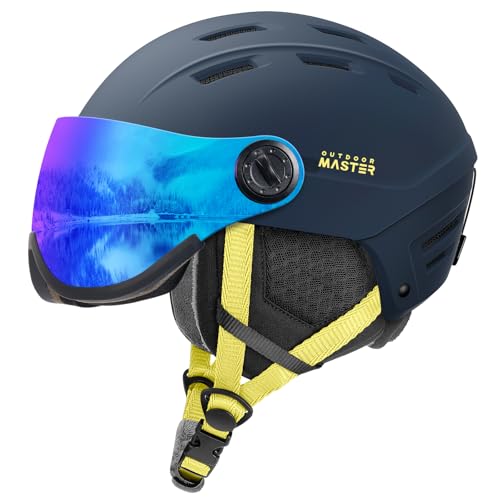
- Size: S (48-54cm), M (54-58cm), L (58-62cm)
- 3 Star Virg Tech Rating
- ASTM F2040 & CE EN 1077 Certified
- Audio Compatible
OutdoorMaster
Aegis
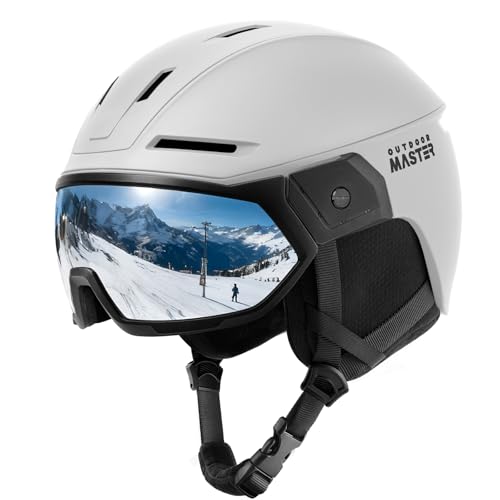
- Size: M (55-58cm), L (58-61cm)
- ASTM F2040 & CE EN 1077 Class B
- OTG Compatible
- Adjustable Vents
Odoland
Visor

- Size: S (53-55cm), M (55-58cm), L (58-61cm)
- ASTM F2040 & CE EN 1077
- 14 Vents with Flow-Tech Venting
uvex
Wanted Visor

- Size: M (54-58cm), L (58-61cm)
- CE EN 1077 Class B Certified
- Adjustable Ventilation
- OTG Compatible
Oakley
MOD7 MIPS

- Size: S (51-55cm), M (55-59cm), L (59-61cm), XL (61-63cm)
- ASTM F2040 & CE EN 1077 Certified
- MIPS (Skull Matrix)
- BOA® 360 Fit
Giro Aria
Spherical MIPS

- Women’s Specific
- Size: S (52-55.5cm), M (55.5-59cm)
- CE EN 1077 Certified
- Spherical MIPS
Giro
Vue MIPS

- Size: S (52-55.5cm), M (55.5-59cm), L (59-62.5cm)
- CE EN 1077 Certified
- Integrated MIPS
- Adjustable Venting
Giro Orbit
Spherical MIPS

- Size: S (52-55.5cm), M (55.5-59cm)
- CE EN 1077 Certified
- Spherical MIPS
- Adjustable Venting
uvex
Instinct Visor
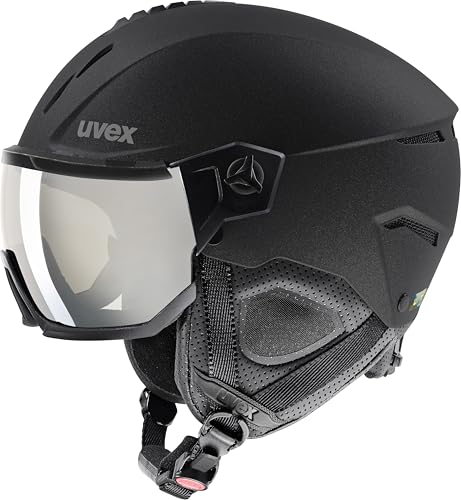
- Size: S (53-56cm), M (56-58cm), L (59-61cm), XL (60-62cm)
- CE EN 1077 Class B Certified
- MIPS
- Adjustable Vents
Smith
Survey MIPS

- Size: S (51-55cm), M (55-59cm), L (59-63cm)
- ASTM F2040, CE EN 1077, CPSC, CE EN 1078
- MIPS + Zonal Koroyd®
Odoland Kids
Visor
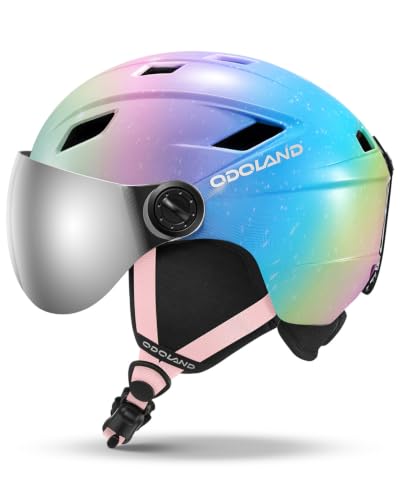
- Size: XS (49-53cm), S (52-55cm) — Ages 3-12
- Magnetic Buckle (Mitten-Friendly)
- Dial-Adjust Fit System
Smith Survey
Jr. MIPS
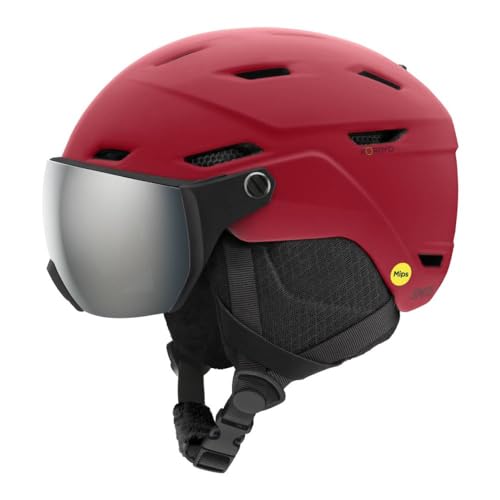
- Size: Youth S-M (48-53cm), Youth M-L (53-58cm)
- ASTM F2040 & CE EN 1077 Class B
- MIPS + Zonal Koroyd®
- OTG Visor
Disclosure: As an Amazon Associate, we earn from qualifying purchases. Disclosure Statement.
Before Buying a Visor Ski Helmet
When buying a new ski helmet it is essential that you purchase the right size for your head. The best way to do that is to measure your head circumference. Even if you know your head size, measure it again just to be sure!
For your convenience, we have provided our video, ‘How To Measure For A Ski Helmet‘ to help you with that.
VIDEO: How To Measure For A Ski Helmet
Want to see more
VISOR SKI HELMETS
Visit the ‘HeadsDontBounce’ shop page on Amazon
Click or Tap here!
Best Visor Ski Helmets in 2026
OutdoorMaster Kelvin II Ski Helmet
Best For: Budget-conscious skiers and snowboarders who want a 3-Star Virginia Tech rated helmet with 14 vents and 11 color options under $60.
The OutdoorMaster Kelvin II is one of the cheapest name-brand ski helmets on the market. At $60 for sizes S and M ($66 for L), it significantly undercuts budget options from Smith, Giro, and others. It earns a 3-Star Virginia Tech rating, carries ASTM F2040 and CE EN 1077 certification, and offers 14 vents, a dial-adjust fit system, removable lining and ear pads, and audio compatibility.
The trade-off is no MIPS or rotational impact protection, no adjustable ventilation (vents are always open), and the ABS hard-shell construction is heavier than the in-mold designs found on pricier helmets. With 11 color options and three sizes covering 48–62cm, the Kelvin II is a solid entry-level pick for skiers who want certified protection without the price premium. OutdoorMaster is an official U.S. Ski Team supplier.
Pros
- 3-Star Virginia Tech rating
- One of the cheapest name-brand ski helmets available
- ASTM F2040 and CE EN 1077 certified
- Three sizes covering 48–62cm
- 11 color options including gradients
- Audio compatible with removable ear pads
Cons
- No MIPS or rotational impact protection
- Vents are not adjustable — always open
- ABS hard-shell is heavier than in-mold construction
Pick up the OutdoorMaster Kelvin II Ski Helmet from one of these vendors.

OutdoorMaster Aegis Ski Helmet with Integrated Visor
Best For: Budget-friendly skiers and snowboarders who want an integrated visor helmet with OTG glasses compatibility at a sub-$90 price.
The OutdoorMaster Aegis is a budget-priced visor ski helmet that bundles an integrated 2-in-1 sun visor with a PC+ABS hardshell helmet. At under $86, it undercuts most visor helmets by a wide margin — brands like Bollé and uvex typically start above $200 for comparable integrated-visor designs. The visor uses a VLT 15% lens with anti-fog coating, UV400 protection, and OTG compatibility for glasses wearers.
The trade-off for the price is a limited size range (only Medium and Large), no MIPS or rotational impact protection, and the visor lens is not interchangeable for varying light conditions. The helmet carries ASTM F2040 and CE EN 1077 Class B certification, removable lining and ear pads, and a dial-adjust fit system. OutdoorMaster is an official supplier to the U.S. Ski Team and a USCSA sponsor, though the brand remains less established than European competitors in the visor helmet category.
Pros
- Significantly cheaper than most visor ski helmets
- Integrated visor eliminates fogging between helmet and goggles
- OTG compatible — fits comfortably over prescription glasses
- ASTM F2040 and CE EN 1077 Class B certified
- Removable lining, ear pads, and padded chin strap
Cons
- Only two sizes (M and L) — no option for smaller or larger heads
- No MIPS or rotational impact protection
- Visor lens is fixed (VLT 15%) — cannot swap for low-light conditions
- Less established brand in the visor helmet category
Pick up the OutdoorMaster Aegis Ski Helmet from one of these vendors.
Odoland Ski Helmet with 2-in-1 Visor Goggles
Best For: Entry-level skiers and snowboarders who want a cheap integrated visor helmet with 14 vents and a carry bag included.
The Odoland Ski Helmet with 2-in-1 Visor Goggles is one of the cheapest integrated visor ski helmets on the market. At around $70, it includes a detachable 2-in-1 visor with anti-fog coating and UV protection, an ABS shell with EPS foam core, 14 air vents with Flow-Tech venting to reduce goggle fogging, and a carry bag. The helmet comes with removable lining, detachable earmuffs, and a soft chin strap.
The main trade-offs at this price: no MIPS or rotational impact protection, no dial-adjust fit system (strap adjustment only), and the visor lens is not interchangeable. Odoland lists safety certifications on their product line but the specific certifications for this visor model are not prominently documented on the listing. Odoland is a budget-oriented Chinese brand founded in 2015, primarily sold through Amazon. For skiers on a tight budget who want to try a visor helmet before investing in a premium option, the Odoland is a low-cost entry point.
Pros
- One of the cheapest visor ski helmets available
- Detachable 2-in-1 visor with anti-fog and UV protection
- 14 air vents with Flow-Tech visor venting design
- Carry bag included
- Removable lining and earmuffs for easy washing
Cons
- No MIPS or rotational impact protection
- No dial-adjust fit system — strap adjustment only
- Visor lens is not interchangeable for varying conditions
- Safety certifications not clearly documented on product listing
Pick up the Odoland Ski Helmet with 2-in-1 Visor from one of these vendors.
uvex Wanted Visor Ski Helmet
Best For: Style-conscious skiers who want a premium European hard-shell visor helmet with adjustable ventilation, replaceable visor, and glasses compatibility.
The uvex Wanted Visor is a German-engineered hard-shell visor helmet that sits at a mid-premium price point. Its standout feature is the fully mirrored visor with uvex supravision® anti-fog coating and a wide VLT range of 19–43% (Category S2), making it versatile across cloudy and sunny conditions. The visor is replaceable, and the helmet is compatible with prescription glasses. An adjustable, closable ventilation system lets riders regulate airflow — a feature missing from most budget visor helmets.
The helmet uses uvex’s IAS dial-adjust fit system, monomatic one-hand chin strap closure, and includes a thermo-regulating lining, soft-touch ear pads, and a neck warmer. At 730g it is heavier than in-mold alternatives, consistent with its hard-shell construction. The key limitation for US buyers: the Wanted Visor carries CE EN 1077 Class B certification only — no ASTM F2040. There is no MIPS or rotational impact protection. uvex is a well-established German brand with decades in the helmet and eyewear market.
Pros
- Fully mirrored visor with supravision® anti-fog coating
- Wide VLT range (19–43%) suits cloudy to sunny conditions
- Visor is replaceable
- Adjustable closable ventilation system
- Glasses-compatible visor design
- Established German brand with strong heritage
Cons
- CE EN 1077 Class B only — no ASTM F2040 certification
- No MIPS or rotational impact protection
- Heavier than in-mold helmets at 730g
- Only two sizes (54-58cm and 58-61cm)
- Premium price at ~$200
Pick up the uvex Wanted Visor Ski Helmet from one of these vendors.

Oakley MOD7 MIPS Snow Helmet
Best For: Performance-focused skiers who want the most seamlessly integrated visor and helmet system available, powered by Oakley Prizm™ lens technology.
The Oakley MOD7 MIPS is a premium visor helmet that takes a fundamentally different approach to visor integration. Rather than a traditional flip-down shield, Oakley’s proprietary Secure-Connect system magnetically connects and mechanically secures a Prizm™ dual-lens visor to the helmet, looking more like a standard helmet-and-goggle setup than a typical visor helmet. The visor features Prizm™ lens technology for enhanced contrast and snow-surface clarity, with an anti-fog inner lens.
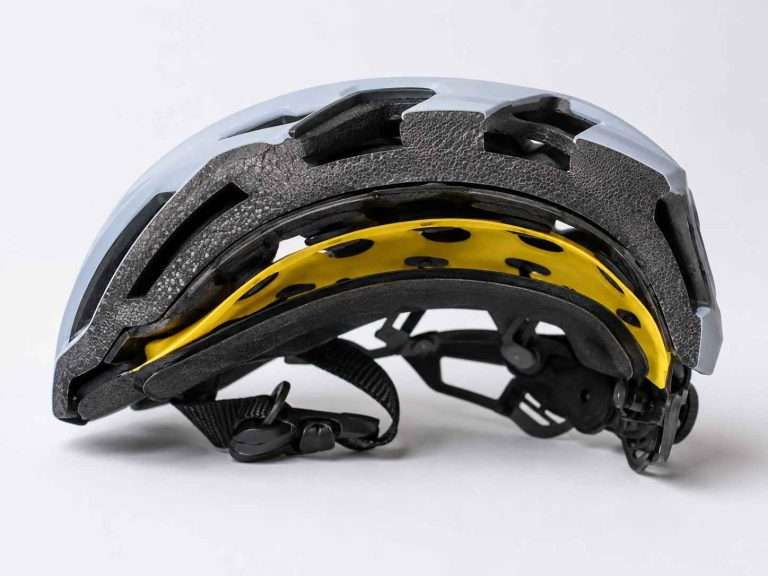
The helmet uses Duramatter Mix hybrid-shell construction (hard-shell Duramatter + polycarbonate), MIPS via the Skull Matrix system (which integrates MIPS and BOA® 360 into a single retention unit), a Fidlock magnetic chin buckle, and lens-seal and lens-eject controls for adjusting or removing the visor. It carries ASTM F2040 and CE EN 1077 certification and comes in four sizes covering 51–63cm. At $545, it is among the most expensive visor helmets on the market — but it is also one of the only ones with MIPS, Prizm™ optics, and BOA® fit in a single package. An I.C.E. variant ($525) replaces MIPS with a twICEme Medical ID chip.
Pros
- MIPS rotational impact protection (Skull Matrix)
- Prizm™ dual-lens visor with anti-fog for superior optical clarity
- Secure-Connect magnetic + mechanical visor attachment
- BOA® 360 fit system + Fidlock magnetic chin buckle
- ASTM F2040 and CE EN 1077 certified
- Four sizes covering 51–63cm
Cons
- Premium price at $545
- Heavier than average at ~800g (Size M)
- Replacement lenses are expensive and limited in options
- No extra lens housing included — swapping the spare lens requires disassembly
- Only 4 vents
Pick up the Oakley MOD7 MIPS Snow Helmet from one of these vendors.
Giro Aria Spherical MIPS Ski Helmet (Women’s)
Best For: Women skiers who want a premium visor helmet with Spherical MIPS, VIVID optics by ZEISS, and glasses compatibility.
The Giro Aria Spherical MIPS is a women’s-specific premium visor helmet featuring Giro’s top-tier protection and optics. The Spherical MIPS system uses a ball-and-socket design with two EPP foam layers that rotate independently during impact, redirecting rotational energy — a step above traditional MIPS slip-plane designs. The seamlessly integrated VIVID shield with Optics by ZEISS® enhances contrast and definition on snow, and articulates up and over the helmet when not in use. Stack Vent technology aligns the visor with the helmet brim to prevent fogging.
The hybrid construction combines a hard-shell upper for durability with in-mold lower and sidewalls for reduced weight. Thermostat Control™ adjustable venting, an In Form™ 2 dial-adjust fit system, Polartec Power Grid padding, and glasses compatibility round out the feature set. At $525, it competes directly with the Oakley MOD7 but in a women’s-specific package. The main limitations: only two sizes (S and M), CE EN 1077 certification only (no ASTM F2040), and the ear pads are not removable.
Pros
- Spherical MIPS — ball-and-socket rotational impact protection
- VIVID shield with Optics by ZEISS® for enhanced snow contrast
- Articulated visor stores securely on top of helmet
- Thermostat Control™ adjustable ventilation with Stack Vent
- Glasses-compatible visor design
- Women’s-specific fit and styling
Cons
- Premium price at $525
- Only two sizes (S and M) — no option for larger heads
- CE EN 1077 only — no ASTM F2040 certification
- Women’s-specific only — no unisex or men’s version
- Ear pads are not removable
Pick up the Giro Aria Spherical MIPS Ski Helmet from one of these vendors.
Giro Vue MIPS Ski Helmet
Best For: All-mountain skiers who want a lightweight MIPS visor helmet with VIVID optics, adjustable venting, and glasses compatibility at a mid-range price.
The Giro Vue MIPS is Giro’s unisex visor helmet, sitting below the women’s-specific Aria Spherical in the lineup. It uses integrated MIPS (standard slip-plane, not the Spherical ball-and-socket design) and in-mold construction that makes it notably lighter at 570g in Size M — well below the Oakley MOD7 (800g) and uvex Wanted Visor (730g). The convertible VIVID shield offers UV protection, a wide field of view, and glasses compatibility. Stack Vent technology aligns the shield with the helmet brim to prevent fogging.
Thermostat Control™ adjustable venting and the In Form dial-adjust fit system (6cm range) with Vertical Tuning round out the features. At $250, it is roughly half the price of the Oakley MOD7 and Giro Aria Spherical, making it the most accessible MIPS-equipped visor helmet from a major brand. The trade-off: standard MIPS rather than Spherical MIPS, CE EN 1077 certification only (no ASTM F2040), and the shield is not a Prizm™ or ZEISS® premium lens — it lacks the contrast-enhancing optics of the higher-end competitors.
Pros
- Integrated MIPS at a mid-range price ($250)
- Lightweight at 570g (Size M) — lightest MIPS visor helmet in this roundup
- Convertible VIVID shield with UV protection and glasses compatibility
- Thermostat Control™ adjustable venting with Stack Vent
- In Form fit system with Vertical Tuning for goggle/head shape adjustment
- Unisex — three sizes covering 52–62.5cm
Cons
- Standard MIPS — not Spherical MIPS like the Aria
- CE EN 1077 only — no ASTM F2040 certification
- Shield lacks premium contrast-enhancing optics (no ZEISS® or Prizm™)
- Shield is not interchangeable for different light conditions
Pick up the Giro Vue MIPS Ski Helmet from one of these vendors.
Giro Orbit Spherical MIPS Snow Helmet
Best For: Performance skiers and glasses wearers who want Giro’s top-of-the-line Spherical MIPS visor helmet with VIVID ZEISS® optics in a unisex fit.
The Giro Orbit Spherical is Giro’s flagship visor helmet and the most expensive helmet in this roundup at $600. It shares the same core technology as the women’s Aria Spherical — Spherical MIPS ball-and-socket rotational impact protection, a seamlessly integrated VIVID shield with Optics by ZEISS® for enhanced snow contrast, and Thermostat Control™ adjustable venting with Stack Vent anti-fog technology. The hybrid construction (hard-shell upper with in-mold lower and sidewalls) balances durability with weight, coming in at 690g in Size M.
The articulated VIVID shield pulls up and over the helmet and stows securely on top, making this a strong choice for prescription glasses wearers who struggle with goggle compatibility. The In Form™ 2 dial-adjust fit system offers 6cm of range with Vertical Tuning for different goggle and head shapes. At $600, it commands a significant premium over the Vue MIPS ($250) and even the Oakley MOD7 ($545). The justification is Spherical MIPS over standard MIPS, ZEISS® optics, and Giro’s premium build quality. Limitations include CE EN 1077 only certification and just two size options.
Pros
- Spherical MIPS — Giro’s top-tier rotational impact protection
- VIVID shield with Optics by ZEISS® for superior snow contrast
- Excellent glasses compatibility — no goggle frame against face
- Thermostat Control™ adjustable venting with Stack Vent
- In Form™ 2 fit system with Vertical Tuning
- Polartec Power Grid padding for comfort
Cons
- Most expensive visor helmet in this roundup at $600
- Only two sizes (S and M) — no option for larger heads
- CE EN 1077 only — no ASTM F2040 certification
- Heavier than the Vue MIPS at 690g (Size M)
- VIVID shield is not interchangeable (spare lens available at additional cost)
Pick up the Giro Orbit Spherical MIPS Snow Helmet from one of these vendors.
uvex Instinct Visor Ski & Snowboard Helmet
Best For: All-mountain skiers who want a MIPS-equipped European visor helmet with hybrid construction, four sizes, and OTG glasses compatibility under $250.
The uvex Instinct Visor is the standout visor helmet in uvex’s lineup and one of the best value propositions in this roundup. Unlike the cheaper uvex Wanted Visor, the Instinct Visor includes MIPS rotational impact protection and hybrid construction (combining hardshell and in-mold technology) at a lighter 640g. The silver-mirrored visor features uvex’s supravision® anti-fog coating, a VLT range of 19–43% (Category S2), three locking stop positions, and OTG compatibility for prescription glasses.
At approximately $220, it is the cheapest MIPS-equipped visor helmet in this roundup — undercutting the Giro Vue MIPS ($250) and dramatically cheaper than the Oakley MOD7 ($545) or Giro Orbit Spherical ($600). The four-size range covering 53–62cm is the broadest of any visor helmet here. The adjustable ventilation, uvex IAS dial-adjust fit, FAS webbing, and monomatic one-hand chin strap round out a strong feature set. Limitations: CE EN 1077 Class B only (no ASTM F2040), the visor lens is fixed (not interchangeable), and the standard model lacks the self-tinting variomatic® visor and FidLock magnetic buckle found on the pricier Instinct Visor Pro V variant.
Pros
- MIPS protection at the lowest price of any MIPS visor helmet in this roundup
- Hybrid construction (hardshell + in-mold) — lighter and more protective than pure hardshell
- Four sizes covering 53–62cm — broadest range of any visor helmet here
- Silver-mirrored visor with supravision® anti-fog and three stop positions
- OTG compatible for glasses wearers
- Lightweight at 640g — lighter than both the Oakley MOD7 and Giro Orbit Spherical
Cons
- CE EN 1077 Class B only — no ASTM F2040 certification
- Visor lens is fixed — cannot swap for low-light conditions (Pro V variant has self-tinting)
- Standard MIPS — not Spherical MIPS like Giro’s premium helmets
- No FidLock magnetic buckle on standard model (Pro V only)
Pick up the uvex Instinct Visor Ski Helmet from one of these vendors.
Smith Survey MIPS Snow Helmet
Best For: All-mountain skiers who want the most broadly certified MIPS visor helmet with ChromaPop™ optics, Koroyd® protection, and the lightest weight in this roundup.
The Smith Survey MIPS is arguably the strongest all-around visor helmet in this roundup. It pairs MIPS with Zonal Koroyd® — Smith’s honeycomb-structured impact absorber that crumples on impact to manage energy beyond what EPS alone can handle — in a lightweight in-mold construction that comes in at approximately 525g in Size M, making it the lightest visor helmet here. The integrated ChromaPop™ visor uses Smith’s proprietary lens technology to enhance contrast, color, and terrain definition on snow, comparable to Giro’s VIVID/ZEISS® and Oakley’s Prizm™.
The Survey carries the broadest certification of any visor helmet in this roundup: ASTM F2040, CE EN 1077 Class B, CPSC, and CE EN 1078 — the only one with both US and European ski helmet standards plus cycling certifications. AirEvac™ ventilation promotes fog-free optics, and the Regulator climate control allows one-handed vent adjustment. Removable Snapfit SL2 ear pads are audio-chip and Aleck™ compatible. The standard model with a ChromaPop visor is $260; a photochromic variant that adapts to changing light conditions is available at $300. The main trade-off is that it uses standard MIPS rather than Spherical MIPS, and the looks are more polarizing than traditional visor helmets.
Pros
- MIPS + Zonal Koroyd® — double impact protection technology
- Most broadly certified visor helmet: ASTM F2040, CE EN 1077, CPSC, CE EN 1078
- ChromaPop™ visor for enhanced contrast and terrain clarity
- Lightest visor helmet in this roundup at ~525g (Size M)
- Photochromic visor option adapts to changing light ($300)
- OTG compatible — designed to fit over prescription glasses
- Three sizes covering 51–63cm
Cons
- Polarizing looks — the integrated visor design divides opinion
- Visor takes some force to lock into place
- Standard MIPS — not Spherical MIPS
- In-mold only — no hard-shell upper for added durability
Pick up the Smith Survey MIPS Snow Helmet from one of these vendors.
Odoland Kids Ski Helmet with 2-in-1 Visor
Best For: Young skiers ages 3–12 who need an affordable integrated visor helmet with a magnetic buckle for easy on/off — even with mittens.
The Odoland Kids Ski Helmet with 2-in-1 Visor is a budget-priced visor helmet designed specifically for children ages 3–12. Its standout kid-friendly feature is the magnetic buckle, which allows children to clip and unclip the chin strap even while wearing mittens — a practical detail that parents of young skiers will appreciate. The integrated 2-in-1 visor attaches directly to the helmet, eliminating the risk of kids losing separate goggles on the mountain. The visor includes anti-fog coating and UV protection.
The helmet uses an ABS outer shell with EPS foam, a dial-adjust fit system, washable ear pads, and a soft chin strap. A storage bag is included. At approximately $50, it is one of the cheapest kids’ visor helmets available. The trade-offs mirror the adult Odoland: no MIPS or rotational impact protection, the visor lens is not interchangeable, and the specific safety certifications are not documented on the product listing despite the brand claiming the helmet is “professionally certified.” Two sizes cover 49–55cm. Parents prioritizing certified MIPS protection for their children should look at other options, but for families seeking a budget entry into visor helmets, the Odoland fills that gap.
Pros
- Magnetic buckle — easy on/off even with mittens
- Integrated visor eliminates lost goggles — practical for kids
- One of the cheapest kids’ visor ski helmets available
- Dial-adjust fit system for growing heads
- Washable ear pads and soft chin strap
- Storage bag included
Cons
- No MIPS or rotational impact protection
- Safety certifications not specifically documented on listing
- Visor lens is not interchangeable for varying light conditions
- Only two sizes (XS and S) — limited to ages 3–12
Pick up the Odoland Kids Ski Helmet with 2-in-1 Visor from one of these vendors.
Smith Survey Jr. MIPS Snow Helmet
Best For: Young skiers whose parents want premium MIPS + Koroyd® protection in a visor helmet with a Grow With Me liner that adapts as kids grow.
The Smith Survey Jr. MIPS is the youth version of the adult Survey and the only kids’ visor helmet in this roundup with both MIPS and Zonal Koroyd® impact protection. That combination — a MIPS slip plane for rotational forces plus Koroyd’s honeycomb energy absorber — delivers a level of safety technology typically reserved for adult premium helmets. The integrated visor provides distortion-free clarity and OTG glasses compatibility, and the Regulator climate control allows one-handed vent adjustment across 14 vents.
The standout youth-specific feature is Smith’s Grow With Me™ dual-stage liner system, which uses two removable liner stages to adapt the fit as a child’s head grows — extending the helmet’s usable life. The helmet carries ASTM F2040 and CE EN 1077 Class B certification, giving parents the assurance of tested US and European ski helmet standards. At $220, it is a significant investment compared to the Odoland Kids Visor (~$50), but parents are paying for MIPS, Koroyd®, ASTM/CE certification, and Smith’s build quality. The visor is a standard distortion-free lens rather than the adult’s ChromaPop™, and the helmet is heavier at 700g. Youth-specific removable Snapfit SL2 ear pads and a plush fuzzy lining round out the comfort features.
Pros
- MIPS + Zonal Koroyd® — premium double impact protection for kids
- ASTM F2040 and CE EN 1077 Class B certified
- Grow With Me™ dual-stage liner extends helmet life as kids grow
- Integrated visor with OTG glasses compatibility
- Regulator climate control with 14 vents
- Plush fuzzy lining and youth-specific Snapfit SL2 ear pads
Cons
- Significant price at $220 for a youth helmet
- Standard visor — no ChromaPop™ like the adult version
- Heavier than the adult Survey at 700g
- Kids may outgrow the helmet before getting full value at this price
Pick up the Smith Survey Jr. MIPS Snow Helmet from one of these vendors.
Want to see more
VISOR SKI HELMETS
Visit the ‘HeadsDontBounce’ shop page on Amazon
Click or Tap here!
What To Look For When Buying A Visor Helmet?
Visible Light Transmission Rating
Why do ski helmets have visors?
The visor on a ski helmet isn’t just for looks — it actually blocks the cold air and snow from blasting you in the face when you’re flying downhill. But honestly, the bigger deal is how much it helps with sunlight. A visor cuts down harsh glare bouncing off the snow and also keeps out those UV rays that can be pretty brutal on your eyes.
Every visor lens has something called a VLT rating (Visible Light Transmission). Basically, that’s just a fancy way of saying how much light comes through the lens. Different lenses are better for different weather — like darker ones for super bright days, lighter ones for cloudy or overcast, and then there’s a whole range in between.
VLT ratings are shown as a percentage, but sometimes you’ll see them labeled as Cat 1, Cat 2, etc. Other times it’s an “S” number, like S2. That comes from the system Smith Optics uses, but it’s all the same idea.
Check the table below, it breaks it down with the categories, numbers, and when to use each one.
VLT Ratings Table.
| Cat. No. | Smith Optics value. | % of light allowed through (Approx). | Description of lighting or weather conditions. |
|---|---|---|---|
| Cat 0 | S0 | 85.00% | It’s snowing, or after sunset. |
| Cat 1 | S1 | 50% – 65% | Overcast. Low light. |
| Cat 2 | S2 | 23% – 36% | Medium brightness. Sunny and cloudy. |
| Cat 3 | S3 | 9% – 16% | Bright and sunny days. |
There’s also photochromic lenses, which are kinda cool since they change automatically with the light — usually covering Cat 1 through 3. Some helmets with visors will give you swappable lenses so you can switch depending on the day. Others just come with one standard lens, usually an S2, which works fine for average sunny-to-overcast conditions.
Safety Certification For Goggles and Faceshields
Just like with the helmet itself, the visors and goggles have to meet certain Safety Standards too. It’s not just about looking good on the slopes, they gotta be tested for real protection.
As the world turns and standards get standardized, the old US standard for ski goggle safety, ASTM F659, was withdrawn in 2024 with the industry now primarily following the international EN ISO 18527-1:2022 standard, which is what European and other international markets use.
So, depending on where you’re buying, you might run into the British version (BS EN ISO 18527-1:2022) or the Australian one (AS/NZS 18527.1:2022), both based on ISO 18527-1:2022.
If you’re shopping for a visor helmet, make sure it’s not just the helmet that’s certified, but the visor too. A lot of people forget that part, but both need to meet the right standards to be considered safe.
Correct Size Is Everything
Like with any helmet — bike, motorcycle, ski, whatever — the biggest thing for safety is making sure it actually fits your head. Not your friend’s, not your sister’s, but yours. And yeah, you also gotta strap it on properly or else it’s not gonna do its job if you fall.
So take a few minutes and measure your head before you buy one. Saves a lot of hassle later. We’ve got a video up top called ‘How To Measure For A Ski Helmet’ if you’re not sure how to do it right.
I hope we have covered the subject of the best ski helmet with visor to your satisfaction. If you enjoyed this article, take a look at the related reads below for some more interesting reads!
Frequently Asked Questions
Can I wear prescription glasses under a ski helmet visor?
What VLT percentage should I choose for a ski helmet visor?
Since most visor helmets come with one fixed lens, common sense says pick for the conditions you ski most, and if you honestly don’t know, an S2 is the safe all-rounder. Buy a dark S3 because it looks cool in the store mirror and you’ll be squinting into flat light by 2 p.m. wondering where the bumps went.
Are photochromic visors worth paying extra for?
The catch is cold, because photochromic lenses get darker and take longer to fade back to clear at low temperatures, so ducking into the trees on a sunny afternoon can leave you looking through a dark lens for a while. So, worth it if your mountain can’t make up its mind, less so if your home hill is sunny most days.
Can I replace the visor if it gets scratched or damaged?
Are visor ski helmets suitable for people with large heads or wide faces?
No size chart tells you how a visor will sit on your face, so this is one to try on in person with the visor pulled all the way down. If it pinches in the store, it won’t magically get comfortable after three hours on the mountain.
Do built-in ski helmet visors fog up easily?
The usual culprit is your own breath, so if you pull a neck gaiter up over your nose, make sure it isn’t funneling warm air straight up behind the visor (which is a very efficient way to fog anything). And resist the urge to flip the visor up on the lift, because letting cold air hit a warm lens only makes it fog worse when it comes back down.
Are ski helmets with visors good for all weather conditions?
The other limit is the lens itself, since one fixed tint can’t be perfect for both a glaring spring afternoon and a snowstorm unless you’ve gone photochromic or carry a spare. So, if you mostly ski on decent days, a visor helmet is hard to beat, but if you chase storms, keep a pair of goggles in the car.
RELATED READS